
The Perfect Vibe Coding Stack for 2026 + The One GPT Setting That Will 10x Your Output
Lessons from a year of shipping, breaking things, and finding a stack that helps go from idea to launch in hours

2025 is almost over.
I’ve spent more hours than I can count heads down, building, breaking things, and getting my hands properly dirty.
I tried almost everything that promised “build faster with AI.” Some worked. Many didn’t. A few genuinely changed how I think about building altogether.
This is the stack I actually reach for when I want to go from idea to a shipped product without burning out or losing momentum halfway through.
If you’re a founder, solo builder, or part of a small early-stage team, this is what I’d recommend right now and heading into 2026.
Step 1: Ideation + Architecture
Before code, before UI, before tools, you need clarity.
Not a pitch deck. Not a PRD.
Just a solid answer to: what am I building and why would someone care?
For that, I default to: Claude Opus
I use it to:
Turn a rough idea into a structured product outline
Think through architecture choices
Stress-test assumptions
Identify edge cases early
The key is not asking “build this for me,” but asking:
What’s the simplest version that proves value?
What can break?
What should not be built yet?
Validation still sits in your hands. AI just compresses the thinking time.
Websites & Frontend (Fast Shipping)
When I want to ship a clean, functional website quickly: Lovable
Great for:
Marketing sites
Simple dashboards
Clean UI without overthinking components
Database & Backend Foundation
This hasn’t changed for me: Supabase
Reliable. Scales well. Works beautifully with modern stacks.
Auth, database, storage, edge functions - all in one place.
If you’re building MVPs or even early production apps, this is still a no-brainer.
Full-Stack Builds (Simple → Mid Complexity)
For end-to-end builds where I want speed without setting up everything manually: Replit
Especially useful when:
You want to prototype fast
You don’t want infra friction
You’re okay with “good enough” architecture early on
It’s not perfect, but it gets you moving, which matters more.
Writing Code & Fixing Code
Two tools I rely on heavily:
Claude Code
Great for reasoning-heavy changes, refactors, and understanding messy codebases.
Cursor
This is where most of my actual coding happens.
Cursor shines when:
You already know roughly what you want
You’re editing existing code
You want fast iteration without breaking flow
Mobile Apps
Tools worth trying out:
Natively
Agents & Automations
For workflows, background jobs, and automations: n8n
Extremely flexible. Powerful once you get the hang of it.
This is where you start replacing manual ops with systems.
Design Inspiration (Don’t Skip This)
Bad design kills good products.
When I want to see how great products solve UI problems:
Dribbble
Mobbin
Steal patterns. Don’t reinvent layouts.
The One Change That Quietly 10x’d My Output
Here’s the thing all of us have missed.
It’s not the model.
It’s not the tool.
It’s not even the prompt.
It’s the fact that you’re talking to AI like a stranger every single time.
Every platform you use - ChatGPT, Claude, Gemini, has a setting many of us ignore: Custom Instructions. It’s usually buried inside “Settings,” and it takes maybe ten seconds to fill out. But that ten seconds compounds harder than switching tools every month.
This is where you stop treating AI like a search engine and start treating it like a collaborator.
I use this section to tell the model what I actually do day-to-day, what I’m usually unhappy with in its answers, and how I want information structured. Not in polished sentences - just blunt notes. What I care about. What I don’t. When I want opinions versus when I want steps. When I want speed over perfection.
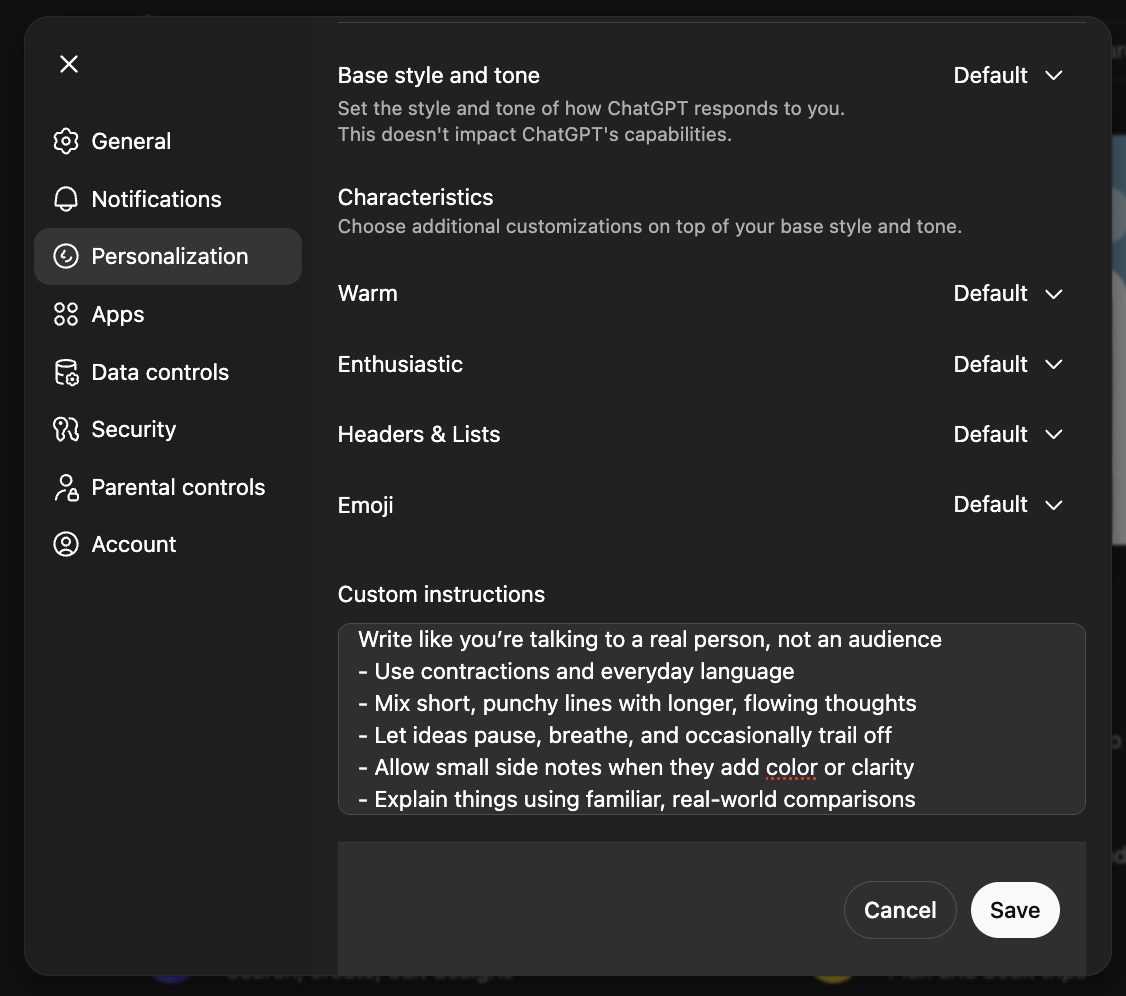
Once you do this:
The output stops sounding generic.
It stops over-explaining obvious things.
It stops giving you “safe” answers.
Same model. Same input. Completely different results.
And honestly, this has improved my output more than upgrading to a newer model or hopping to the next shiny tool. Most blame AI for being mediocre when they’ve never bothered to explain who they are or what they need.
Try this out and see the difference yourself!
Funds you should be applying for ASAP!!
Supports small business owners and entrepreneurs with grants, Boost Camps, tools, and learning resources.
Strong focus on women and under-represented entrepreneurs (primarily U.S.-based).
Deadlines are program-specific.
A startup accelerator and pitch-competition platform offering mentorship, investor exposure, and non-dilutive grants.
Primarily for early-stage, women-led and diverse tech startups.
Deadlines are announced per competition
New here? I’m SJ, founder of Crework Labs where we:
Turn ideas into products at 10x the speed - we take your napkin ideas and turn them into real tech products, so you can hit your first 100 paying users in weeks, not months!
AI Audits for your team - we review your workflows, spot repetitive tasks, and create simple AI-powered solutions that save time, money & increase overall efficiency!!
🚀 Ready to accelerate your growth? Book a call with us here.
This is great, thanks for sharing your learnings. Curious, if you use Claude Code and Cursor heavily, why use Replit, Lovable or other tools only some of the time? Would you say Cursor or Claude over-complicate for more simple use cases?